What Is a Belt Filter Press? Sludge Dewatering Explained
Introduction
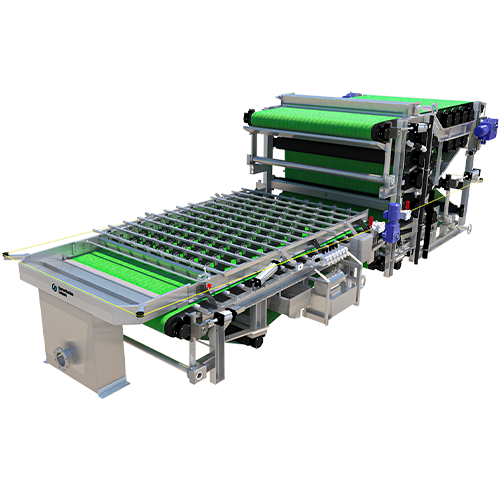
A belt press, commonly referred to as a belt filter press, is a mechanical dewatering system used to separate water from sludge and other liquid solid mixtures. It is widely used in municipal wastewater treatment, industrial processing, agricultural operations, and food production to reduce sludge volume and improve handling efficiency.
By removing excess moisture, belt presses help facilities lower disposal costs, improve process performance, and produce a more manageable final product. Sludge dewatering is a critical step in wastewater treatment, helping reduce waste volume and prepare solids for disposal or further processing.
According to the U.S. Environmental Protection Agency (EPA), effective sludge handling and dewatering are essential components of modern wastewater treatment systems.
What Is a Belt Press?
A belt press is a continuous filtration system that uses porous belts and mechanical pressure to extract water from sludge. Conditioned sludge is fed between moving belts where pressure is gradually applied, forcing water through the belt while retaining the solid material.
The result is a dewatered sludge “cake”, which is significantly easier to transport, store, or further process.
Why Is Sludge Dewatering Important?
Sludge dewatering is a critical step in wastewater and industrial processing because it:
- Reduces the volume of material requiring disposal
- Lowers hauling and transportation costs
- Improves handling and storage
- Enables downstream processing such as composting or drying
- Supports compliance with environmental and operational requirements
Without dewatering, sludge remains highly water laden, making handling inefficient and costly.
How a Belt Filter Press Works
While designs vary, most belt presses follow the same fundamental stages:
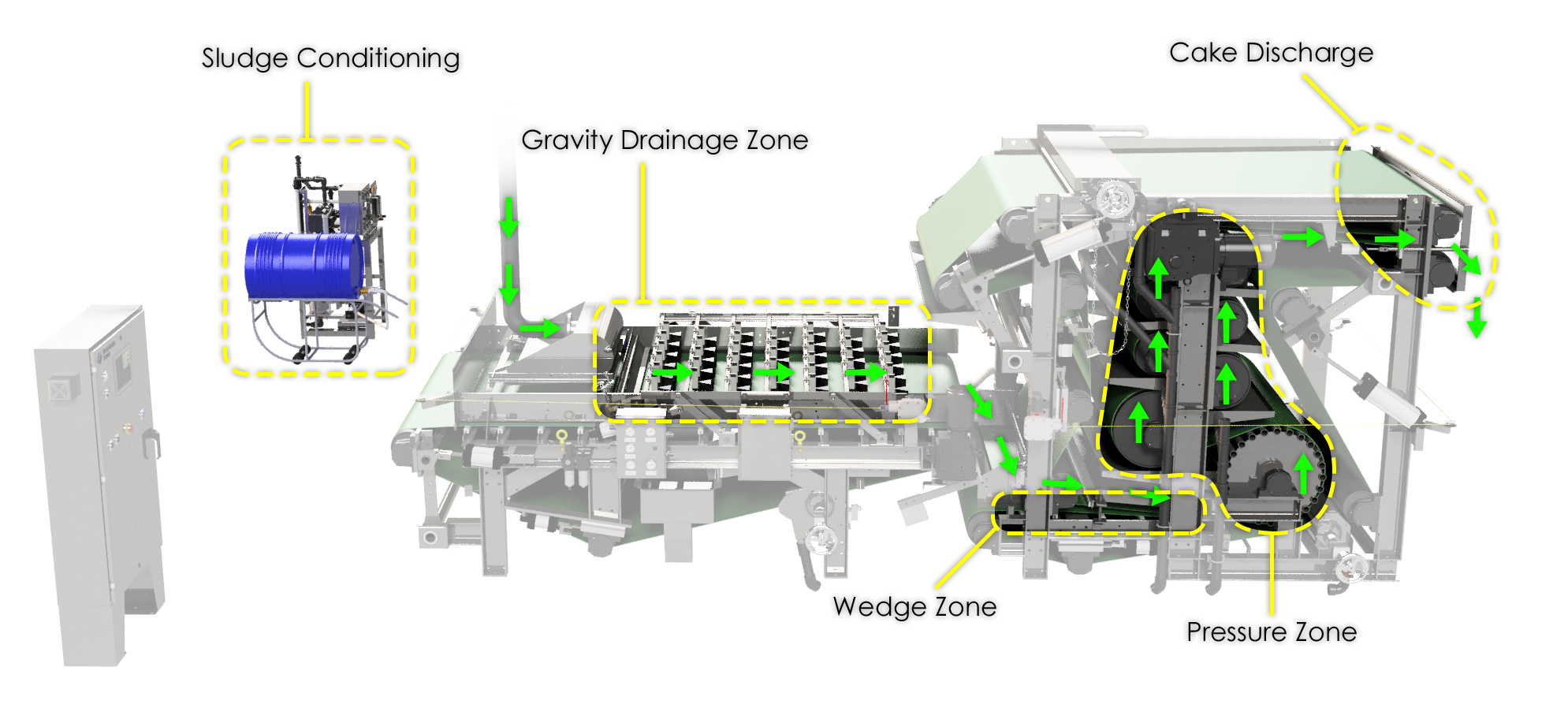
Figure: Sentry Press Belt filter press showing the dewatering process from sludge conditioning through gravity, wedge, and pressure zones to cake discharge.
1. Sludge Conditioning (Flocculation)
Sludge is mixed with polymer to bind fine particles together, improving water release. Polymer preparation and dosing systems are used to ensure proper conditioning and consistent performance.
2. Gravity Drainage Zone
Conditioned sludge is distributed onto a moving belt where free water drains naturally. This stage can also function as a standalone thickening process, as seen in gravity belt thickener systems designed to increase solids concentration prior to mechanical dewatering.
3. Wedge Zone
Two belts gradually come together, applying light pressure and removing additional water.
4. Pressure Zone
The sludge passes through rollers that apply increasing pressure, extracting more water and forming a solid cake.
5. Cake Discharge
The dewatered sludge separates from the belt and is collected for handling or disposal. A wash system continuously cleans the belts to maintain performance.
Applications of Belt Presses
Belt presses are used across a wide range of industries:
Municipal Wastewater Treatment
- Primary and secondary sludge dewatering for biosolids processing
- Reduction of sludge volume prior to hauling, disposal, or reuse
- Continuous solids handling in activated sludge and biological treatment systems
Typical materials include raw sewage, return sludge, grit, and secondary treatment residuals.
More municipal wastewater applications →
Industrial Applications
- Dewatering of process sludges from pulp and paper manufacturing
- Separation of solids from chemical, plastics, and industrial wastewater streams
- Handling of mineral and material processing residuals, including mining wastes
Typical materials include pulp and paper sludge, chemical and industrial wastewater sludges, mining tailings, industrial oil sludge, and other process residuals requiring mechanical dewatering.
More industrial sludge dewatering applications →
Food & Beverage Processing
- Separation of solids from process wastewater and washdown streams
- Dewatering of organic byproducts and production residuals
- Reduction of waste volume for disposal, reuse, or further processing
Typical materials include fruit and vegetable processing, potato and grain operations, breweries, dairy and milk processing, as well as products such as syrups, oils, and organic food residuals.
More food and beverage applications →
Agricultural and Processing Operations
- Dewatering of manure, digestate, and agricultural waste streams
- Nutrient concentration and solids separation for land application or reuse
- Management of residuals from agricultural processing and organic waste handling
Typical materials include livestock manure, dairy waste, crop residuals, and organic sludges from fertilizer or farming operations.
More agricultural dewatering applications →
Advantages and Limitations of Belt Presses
Advantages
Continuous operation for high throughput
Belt press systems operate continuously, allowing for efficient processing of large volumes of sludge without interruption—making them well suited for high capacity wastewater and industrial applications.
Proven, reliable technology
Belt presses are a widely adopted and well understood dewatering solution, with a long history of dependable performance across multiple industries.
Relatively low energy consumption
Compared to other mechanical dewatering methods such as centrifuges, belt presses generally consume less energy, contributing to lower operating costs and reduced environmental impact.
Adaptable to varying sludge types
Belt presses can handle a wide range of sludge characteristics and concentrations, allowing flexibility across municipal, industrial, and agricultural applications.
Low polymer consumption
Belt presses often require lower doses of conditioning agents (such as polymers) compared to high speed dewatering technologies. This can reduce both operating costs and chemical usage.
Limitations
Requires polymer for effective performance
Proper conditioning is essential for achieving efficient dewatering and optimal cake formation.
Requires consistent wash water supply (often recycled within the system)
Continuous belt cleaning is necessary to prevent blinding and maintain filtration efficiency.
Operator attention and maintenance requirements
Routine inspections and maintenance are required to ensure proper operation and long term performance.
Performance depends on sludge characteristics
Dewatering efficiency can vary depending on sludge composition, including solids content and the presence of oil, grease, or fine colloidal material.
Requires proper screening and preprocessing
Wastewater solids should be screened or ground to remove debris and sharp objects, which can damage belts and reduce equipment lifespan.
Additional Considerations
Cleaning and Maintenance Requirements
Regular cleaning of belts and rollers is necessary to maintain efficiency and prevent clogging. This process can be labor intensive and impact operating costs.
However, modern belt press systems increasingly incorporate automated cleaning features designed to maintain belt performance while reducing manual maintenance requirements and improving operational efficiency.
Space Requirements
Belt presses typically require a larger footprint compared to some alternative dewatering technologies. Adequate space must be considered during system design and installation.
In some cases, equipment configurations and system layouts can be optimized to reduce footprint and better accommodate site constraints.
Odor and Noise Considerations
The dewatering process can generate odors and mechanical noise, particularly in open installations. Facilities may require additional measures such as ventilation, odor control systems, or enclosure design depending on site conditions.
Dewatering Limitations for Certain Sludge Types
Certain sludge types - such as those with high oil and grease content or high colloidal solids—may be more difficult to dewater effectively using a belt press. In these cases, alternative or supplemental treatment methods may be considered.
Proper system design and operation are essential for maximizing efficiency.
Belt Press vs Other Dewatering Methods
When selecting a sludge dewatering solution, belt presses are often compared to other technologies based on energy use, polymer requirements, maintenance, and operational characteristics.
Sludge Dewatering Comparison
| Method | Operation | Dryness | Energy Use | Best Use Case |
|---|---|---|---|---|
| Belt Filter Press | Continuous | Moderate | Low | High-volume processing |
| Centrifuge | Continuous | Higher | High | Compact installations |
| Plate & Frame Filter Press | Batch | High | Low | Maximum dryness |
| Screw Press | Continuous | Moderate | Low | Small footprint |
| Drying Bed | Batch (slow) | Moderate | Very low | Low-cost, small-scale use |
Each dewatering method offers different strengths depending on sludge characteristics, operational requirements, and site constraints. The following sections provide a more detailed comparison of how belt presses perform relative to other technologies.
Belt Press vs Centrifuge
Belt Press
- Continuous operation for steady, high volume sludge processing
- Lower energy consumption compared to high speed separation systems
- More forgiving with polymer dosing and feed variability
- Lower noise levels compared to centrifuges
- Simpler mechanical design with fewer high speed components
- Easier maintenance and repair
- Lower overall environmental impact due to reduced energy and polymer consumption
- Faster startup and shutdown compared to centrifuges, which can require extended time to reach full operating speed
Centrifuge
- Continuous high speed separation process using centrifugal force
- Higher energy consumption due to high rotational speeds
- Typically requires more precise or higher strength polymer conditioning
- Capable of achieving higher cake dryness depending on application
- Lower wash water requirements
- Generates higher noise levels
- More compact footprint (advantage in space limited installations)
- More complex equipment with specialized maintenance requirements
Comparison Summary
Centrifuges achieve faster separation and higher cake dryness, making them well suited for applications where space constraints, higher solids capture, or rapid processing are primary drivers.
Belt presses, in contrast, provide lower cost, continuous dewatering with simpler operation, and are often preferred in large scale installations where energy efficiency, maintainability, and consistent throughput are key considerations.
Application Considerations
Belt presses are commonly used in applications such as municipal wastewater treatment and other processes where continuous operation, moderate dryness, and energy efficiency are important. They are particularly well suited for large-scale systems with steady sludge flows.
Centrifuges are often selected in industries such as food processing, pharmaceuticals, chemical, and petrochemical applications, where higher dryness, faster processing, or a more compact system footprint are critical requirements.
In some facilities, a combined or staged approach may be used, incorporating both technologies at different points in the process to optimize overall performance, cost efficiency, and solids handling.
Belt Press vs Plate & Frame Filter Press
When evaluating sludge dewatering technologies, one of the most important distinctions is the difference between continuous and batch processing. Belt presses operate continuously, making them well suited for consistent, high volume sludge streams, while plate and frame filter presses function as batch systems, processing sludge in cycles.
Belt Press
- Typically higher throughput capacity depending on belt press size and configuration
- Continuous operation
- Moderate power consumption
- Uses polymer and continuous wash water (often recycled)
- Flexible across a wide range of sludge types
- Uses continuous moving filter belts to remove water through drainage and pressure
- Maintenance and repair friendly
- Easier and more automated operation
Plate & Frame Filter Press
- Batch process
- Low energy consumption
- Lower polymer requirements
- Minimal to no wash water
- Uses filter plates that form enclosed chambers where sludge is compressed under pressure
- Capable of achieving higher cake dryness depending on sludge characteristics and operation
- Requires more operator management between cycles
Comparison Summary
Plate & frame filter presses are often selected when higher cake dryness is a key requirement, while belt presses are commonly used for continuous processing and higher throughput applications.
Operational Control and Process Flexibility
While plate and frame filter presses provide batch control by isolating and processing sludge in individual cycles, belt press systems can also be effectively adjusted to handle variations in sludge conditions within a continuous process.
Operational parameters such as polymer dosing, mixing intensity, and feed consistency are routinely optimized during startup and ongoing operation. Modern polymer systems allow precise control of water dilution and polymer injection, enabling operators to respond to changing sludge characteristics in real time.
In practice, many facilities operate multiple belt presses in parallel, allowing flexibility in managing variations while maintaining consistent throughput. With proper setup and process control, belt press systems can achieve stable and repeatable performance across a wide range of operating conditions.
Downstream Solids Processing Considerations
While some batch systems can produce drier cake in individual cycles, overall solids handling performance depends on the complete process - not just initial cake dryness.
In many applications, mechanical dewatering is only one stage of treatment. Continuous systems such as belt presses are often designed to handle large volumes efficiently, delivering consistent output that can be further processed downstream.
Additional processes, such as low temperature drying or electro osmosis dehydration, may be used to increase solids concentration beyond what mechanical dewatering alone can achieve. These approaches allow facilities to optimize overall performance by balancing throughput, handling efficiency, and final solids content.
Belt Press vs Screw Press
Belt Press
- Typically higher throughput capacity depending on belt press size and configuration
- Continuous operation
- Requires wash water
- Flexible across sludge types
- Maintenance and repair friendly
Screw Press
- Medium to low power consumption
- Compact footprint
- Uses little to no wash water
- May require significant polymer depending on application
- Continuous operation
- Simple mechanical design
Comparison Summary
Belt presses are often favored for higher‑throughput applications due to their ability to scale through increased belt width, extended process zones, and multi‑roller pressure sections. This design allows large volumes of sludge to be processed continuously while maintaining effective dewatering performance.
Screw presses, by comparison, are typically more compact and are often selected for applications where space is limited. While both technologies can offer comparable dewatering performance, belt presses are generally better suited for large‑scale operations requiring consistent, high‑volume processing capacity.
Belt Press vs Drying Beds
Belt Press
- Continuous, mechanical dewatering process
- High throughput capacity suitable for medium to large scale operations
- Controlled and predictable operation
- Requires power, polymer conditioning, and continuous wash water (often recycled)
- Produces consistent output with moderate to high cake solids depending on sludge characteristics
- Compact compared to land based drying methods
- Suitable for direct dewatering in municipal and industrial applications
Drying Beds
- Batch process relying on natural evaporation and drainage
- Extremely low energy requirements aside from pumping sludge to fill the beds
- Little to no polymer use
- Lower throughput due to long drying times and weather dependence
- Requires significant land area and favorable environmental conditions (sunlight, climate)
- Minimal mechanical maintenance but higher dependence on operator scheduling and environmental factors
- Often used as a pre thickening or low cost solids reduction method
Comparison Summary
Drying beds are typically used in small scale or low budget applications, or where land and climate conditions allow for natural dewatering over time.
Belt presses, in contrast, are suited for continuous, high volume processing, providing more consistent and controlled dewatering performance in applications where throughput, reliability, and space efficiency are critical.
Application Considerations
Drying beds are often used as a pre thickening step or in facilities with low sludge volumes, where long retention times are acceptable and operational costs must be minimized.
Belt presses are more commonly used for direct dewatering in municipal wastewater treatment plants and industrial operations, where continuous processing and predictable output are required.
In some systems, drying beds and mechanical dewatering equipment may be used together, with drying beds providing initial solids concentration prior to further processing.
Overall Summary
Each dewatering method offers distinct advantages depending on the application. Belt presses remain a widely used solution due to their balance of continuous operation, energy efficiency, maintainability, and performance across a broad range of sludge types.
Selecting a Belt Press System
Choosing the right belt press requires consideration of several factors:
- Sludge characteristics (solids content, type, variability)
- Required throughput capacity
- Desired cake dryness
- Polymer consumption requirements
- Space constraints and installation conditions
- Availability of service and replacement parts
Working with an experienced manufacturer helps ensure proper system selection and long term performance.
Manufacturers such as Charter Machine Company design and supply belt filter press systems for municipal, industrial, agricultural, and food processing applications, supported by in house engineering, fabrication, and field service capabilities.
Learn more about belt filter press systems:
https://chartermachinecompany.com/products/dewatering/beltfilter-presses
Frequently Asked Questions
What is a belt press used for?
A belt press is used to remove water from sludge, reducing volume and improving handling for disposal or further processing.
What is the difference between gravity belt thickener and belt filter press?
What is another name for a filter press?
How dry is sludge from a belt press?
Where are belt presses commonly used?
They are widely used in municipal wastewater treatment plants, industrial processing facilities, and agricultural operations.
When should I choose a belt filter press?
What is the difference between a tower press and a belt filter press?
How can I increase cake solids in a belt filter press?
Conclusion
Belt presses play a critical role in modern sludge and wastewater processing by providing a reliable, continuous method of dewatering. Their ability to handle a wide range of applications, combined with proven performance and operational flexibility, makes them a widely adopted solution across industries.